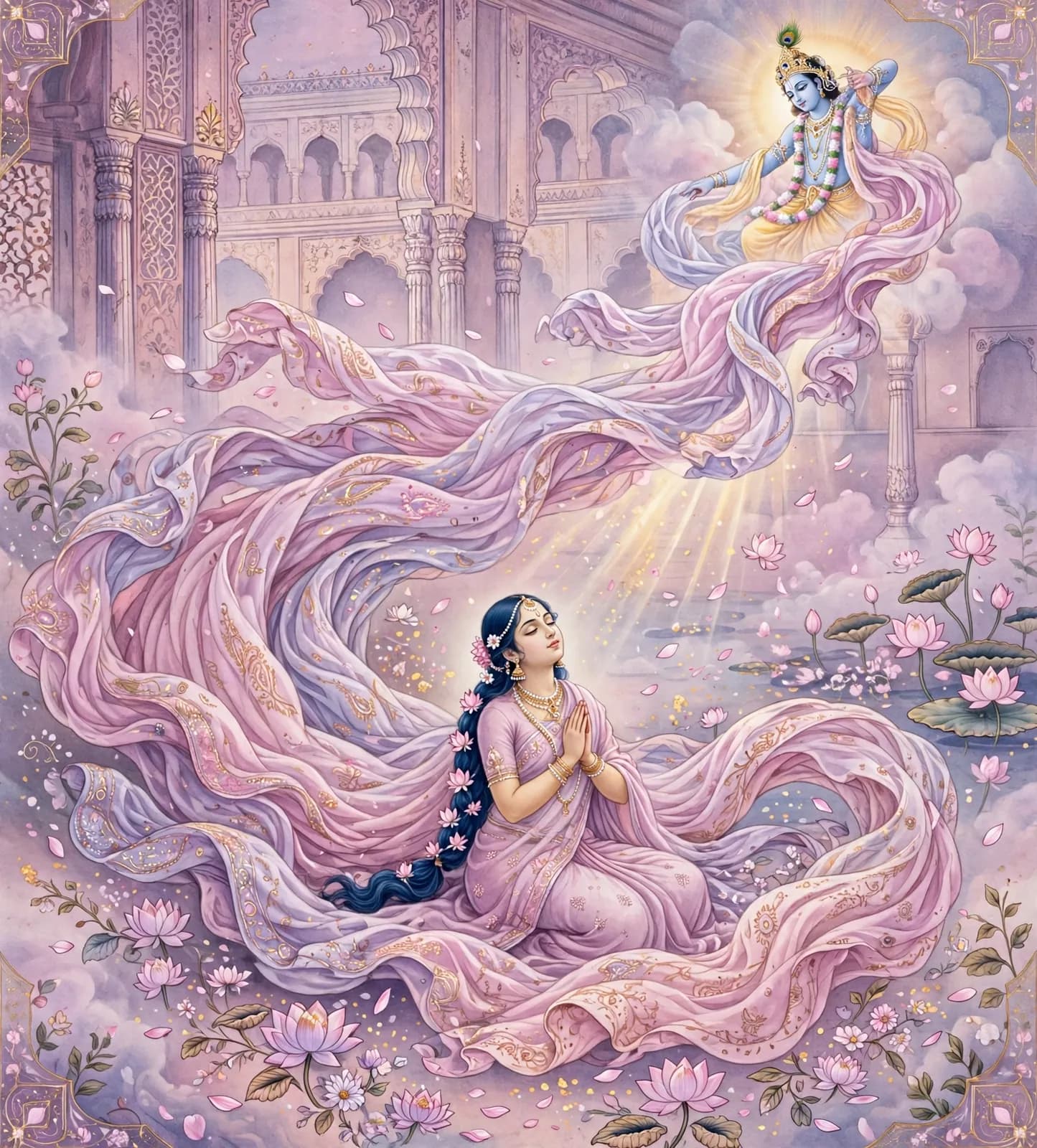
Dice game ke decisions ne Pandavon ko apni possessions aur freedom se vanchit kiya. Yudhishthira ne Draupadi ko bhi stake kar diya. Usse court mein laane par usne basic legal-moral sawaal uthaya: jo pehle hi apne aap ko haar chuka ho, kya uske paas kisi aur ko stake karne ka right bachta hai? Assembly ko ek difficult answer dena tha.
Court ke elders aur powerful logon ki presence protection guarantee nahi bani. Draupadi ki dignity par attack hua aur narration assembly ki failure ko expose karti hai. Versions mein rescue aur cloth miracle ki details alag milti hain; devotional tellings Krishna ki intervention ko central rakhti hain. Is summary mein attack ke sensational detail ke bajay wrongdoing aur silence ko focus diya gaya hai.
Draupadi ka question private grief ko public accountability mein badalta hai. Usne apne treatment ko normal rule maan kar accept nahi kiya. Later events mein is humiliation ki memory conflict ko shape karti hai. Court ki power par ek permanent question reh jaata hai: authority ka use vulnerable person ki protection mein kyun nahi hua?
Story ka modern lesson victim se endless endurance expect karna nahi. Consent aur dignity ownership ke objects nahi hain. Bystanders ki responsibility aur institutions ki accountability important hain. Religious rescue ko real situations mein help delay karne ka reason na banayein. Harm ho raha ho to safety, support aur appropriate action ki zaroorat hoti hai.
Is katha ke paatra
- Draupadi
- Yudhishthira
- Duryodhana
- Dushasana
- Bhima
- Krishna
- Dhritarashtra